
Density reduction
Hollow shells displace resin and cement volume, reducing finished system weight while structural integrity is preserved.
Flagship material · Oil Field Materials
Primary market — Oil Field Materials
Hollow alumino-silicate microspheres, dried and classified in-house. Where a system needs weight taken out without giving up insulation or pumpability, cenospheres are the working answer — and they are the material NPE has built its process control around since 2005.
Product overview
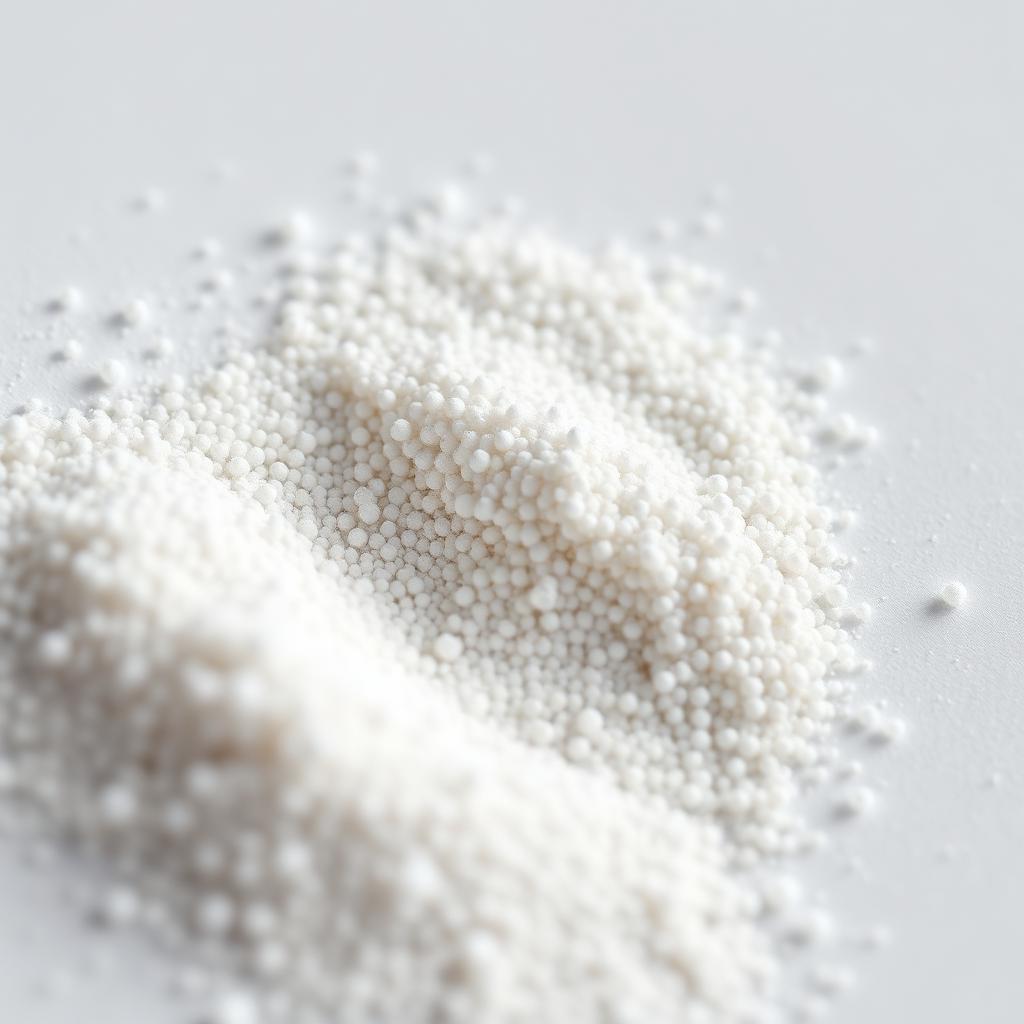
Cenospheres are free-flowing, inert microspheres with a thin alumino-silicate wall enclosing a sealed gas void. That geometry does what an angular extender cannot: it displaces heavy resin or cement volume, it interrupts heat transfer through the matrix, and it keeps a system workable at high loading because spheres roll past one another instead of interlocking.
NPE processes raw feed through drying, classification and separation before grading. Grade envelopes are held to the requirement agreed with the customer, and each consignment is released against that agreed specification rather than a general description.
Supply runs from lined bags for laboratory and pilot work through jumbo bags and container-bulk shipments, with liner and packaging selected for the transit route. Most output is exported, so moisture protection and destination-market documentation are part of the standard scope.
Product information
Lightweight hollow microspheres — Product grades, technical specifications and supporting documentation are available on request.
Key benefits
Each point below is a reason the material is specified. Values are not published; grades and technical specifications are available on request.
Hollow shells displace resin and cement volume, reducing finished system weight while structural integrity is preserved.
The sealed gas void gives low conductivity, which is why cenospheres are used in downhole thermal cements and insulation compounds.
Rigid ceramic shells are selected against the loading the application imposes, so the void survives placement rather than collapsing.
Alumino-silicate chemistry holds sphere geometry through firing cycles in insulating castables and monolithic linings.
Sphericity lowers viscosity at high loading, improving pumpability, spray application and mould filling compared with angular fillers.
Non-reactive and non-combustible, with resistance to acids, alkalis and hydrocarbons in service.
Product grades & technical specifications
Product grades are available on request. Technical specifications are available on request and are agreed per customer before the first order, becoming the release criteria for every batch that follows.
Product grades
Available on request
Grades supplied to customer requirement
Technical specifications
Available on request
Agreed before first order
Chemical composition
Available on request
Reported per consignment
Particle size / sizing
Available on request
Set with the customer
Packing specification
Available on request
Selected for destination and route
Documentation
Available on request
TDS, SDS/MSDS, COA and brochures
On request
Product grades, technical specifications and supporting documentation are available on request.
Applications
Duties the material is supplied into, with grade selection confirmed with our technical team before the first order.
Slurry density reduction to protect weak formations while compressive strength development and thermal insulation are maintained across the annulus.
Lightweight systems used in completion and remedial work where placement weight has to be controlled.
Insulating cement and compound systems used to limit heat transfer along the wellbore.
Epoxy and polyurethane buoyancy systems for subsea modules and riser insulation.
Insulating castables and precast shapes where lower thermal mass shortens heat-up cycles.
Thermal-barrier coatings, lightweight putties and composite compounds needing weight reduction.
Industries served
Supplied into technical supply chains where the material is qualified before it is purchased.
Oil & Gas
Cementing, completion and downhole thermal management.
Marine & Subsea
Buoyancy, insulation and protective coating systems.
Refractories
Insulating castables, precast shapes, monolithic linings.
Construction
Lightweight mortars, precast panels, fire protection.
Polymers & Composites
Weight reduction in thermoset and thermoplastic compounds.
Paints & Coatings
Thermal-barrier and functional filler systems.
Why choose NPE
Manufacturing since 2005, exporting since 2006, with supply experience across more than one hundred countries.
Manufacturing in West Bengal and Maharashtra, India, with a current annual capacity of 4,000 MT and a single quality standard across both sites.
Materials engineered and supplied for demanding oil-well applications, with grades set to customer requirements.
Requirements are agreed before the first order and become the basis on which each subsequent consignment is released.
Around 95% of output is exported, with supply experience across more than 100 countries and documentation prepared for the destination market.
Resources
Technical documentation including TDS, SDS/MSDS, COA, Product Brochures and Packaging Specifications are available upon request.
Standard documentation
Grade-specific on request
Engineering questions
Contact
Describe the oil-well or industrial application and the requirement the material has to meet. Product grades, technical specifications and documentation are issued on request, usually within one working day.